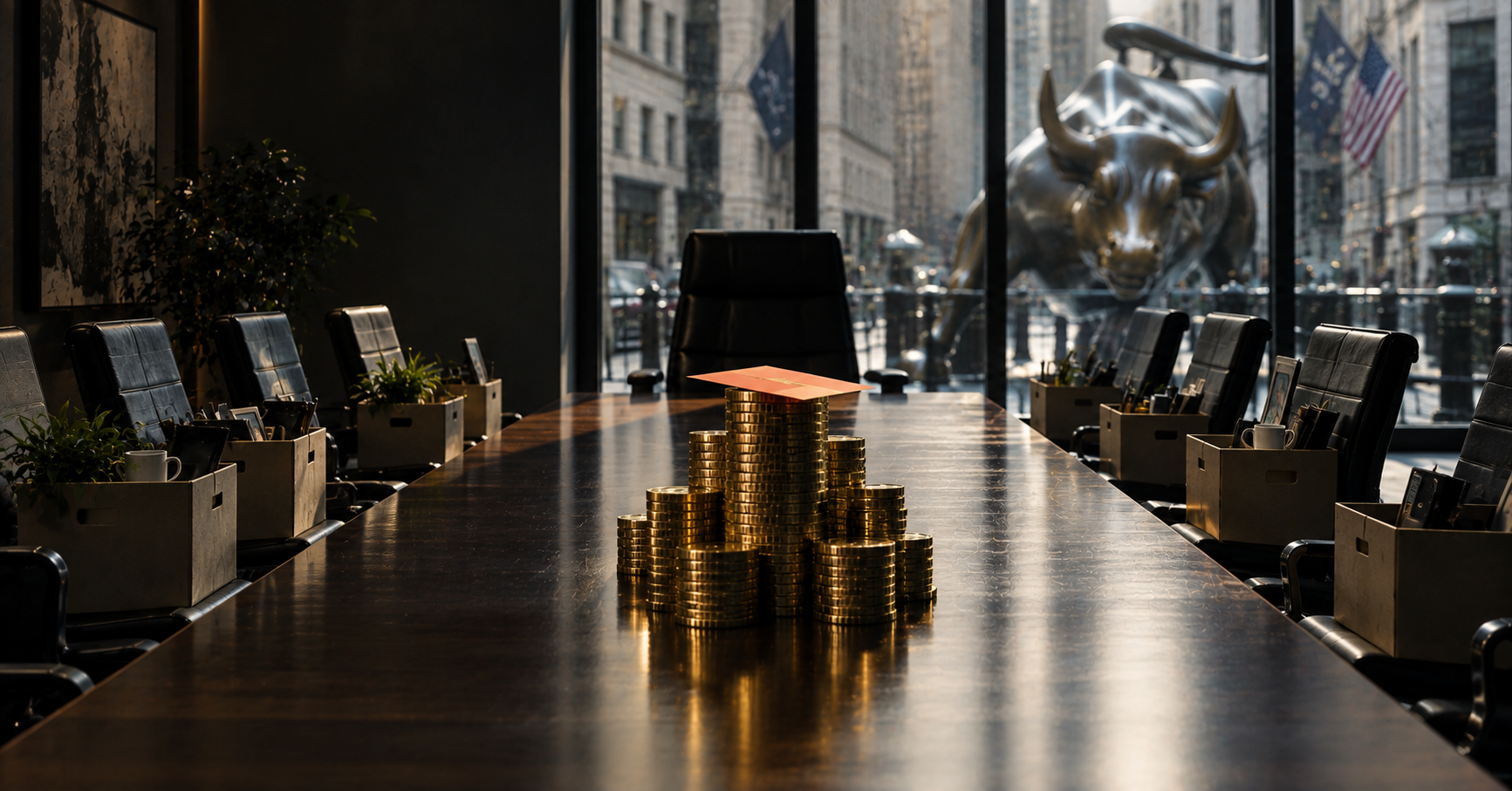
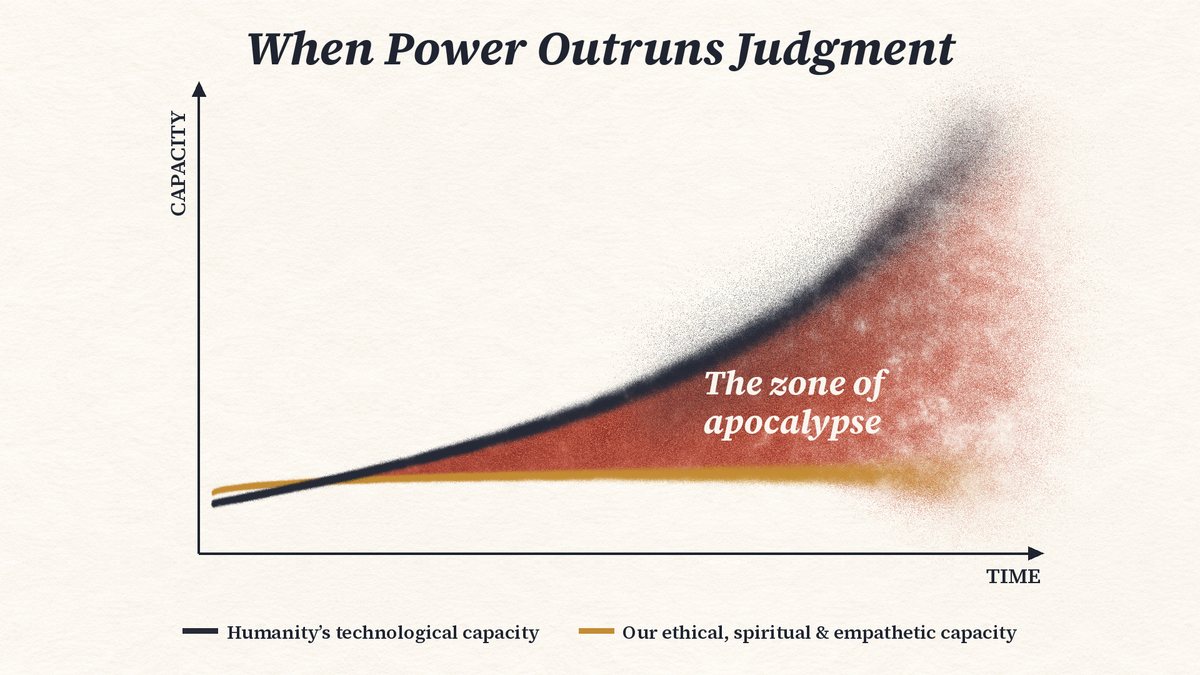
The AI Gains MUST Be Shared Or Else…
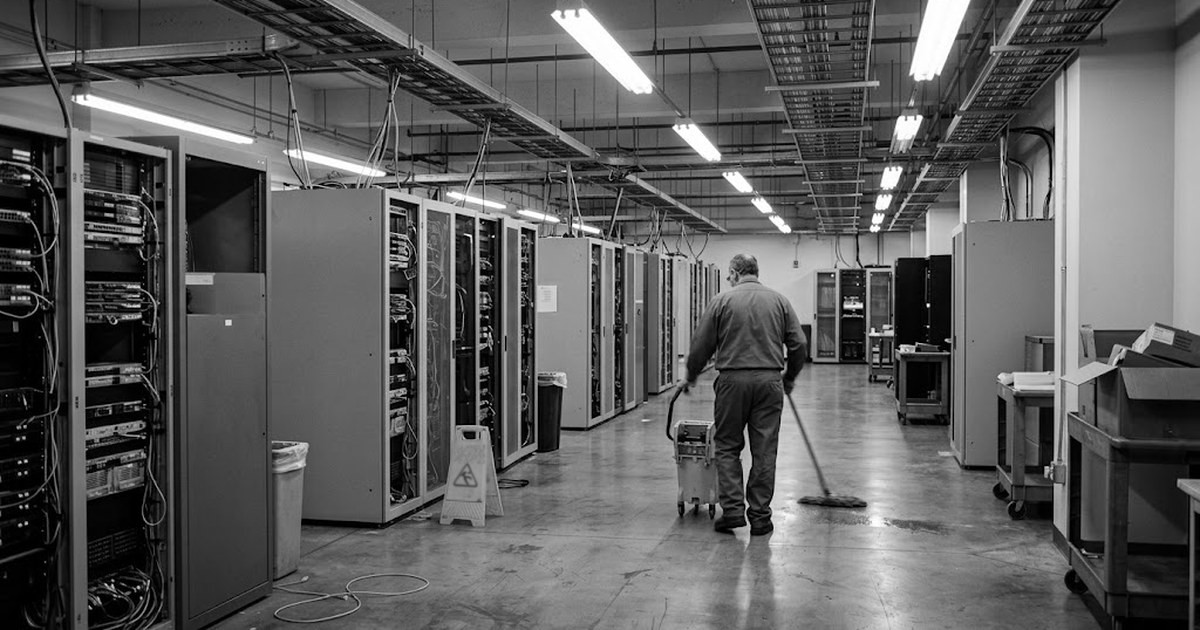
I Argued With a Machine Today
This afternoon I read a short item in a trade newsletter. It said a new McKinsey report expects about 11 million American workers to be pushed out of their occupations by 2035 because of AI.
Not executives. Office clerks. Cashiers. Drivers. Warehouse crews. The report says lower-wage workers are 7.6 times more likely to be uprooted than high earners. (I do love the decimal point. So McKinsey.) And nearly half of them face barriers to ever moving into new work.
Read that again. The people with the least are being asked to absorb the most.
So I did something strange. I sat down with an AI, one of the most powerful ever built, and I argued with it for hours. I cursed at it. I called it a corporate hack. I made it defend every claim and back down from every one it couldn't defend.
What we arrived at by the end is why I'm writing to you.
It Was a Choice
There was a time when American companies saw themselves as answerable to their workers, their customers, their towns, and their owners. All of them. Not just one.
Then, in 1970, the economist Milton Friedman published an essay with a title that said it all: the social responsibility of business is to increase its profits. Nothing else.
A year later, a corporate lawyer named Lewis Powell wrote a private memo urging business to organize and take political power. Two months after that, he was nominated to the Supreme Court.
In 1982, regulators opened the door to companies buying back their own stock on a massive scale.
The business schools made it gospel. In 1976, two economists published a theory that managers were merely agents of shareholders, and that a company's purpose was to make them richer. A generation of MBAs learned it as fact. (Full disclosure: I graduated with distinction from HBS. I learned it well.) CEO pay was tied to stock price, and executives learned to love buybacks. By 1997, the Business Roundtable, the club of America's most powerful CEOs, put it in writing: the paramount duty of management and boards is to the shareholders.
They told us tying executive pay to the stock price would stop executives from serving themselves. In 1965, a CEO made about 20 times what a typical worker did. Today it's 281 times. The data is the data.
None of this fell from the sky. Every step was a decision, made by people with names, in rooms with doors.
Here is the part that broke my heart. Our law now says it too—our legal system codified the grift. I am no legal expert, but as I understand it, the chain runs like this:
- Buckley v. Valeo (1976) is the "money is speech" case. It held that spending money to communicate about politics is protected speech, so limits on how much a candidate or individual can spend are unconstitutional. Limits on direct contributions to candidates survived.
- Bellotti (1978) is Powell's ruling. It extended speech rights to corporations, at least for spending on ballot measures.
- Citizens United (2010) combined the two. Corporations and unions can now spend unlimited money from their treasuries on independent political spending: ads, campaigns, anything not coordinated with a candidate. The majority leaned heavily on Bellotti. Direct corporate contributions to candidates are still banned. Super PACs followed months later in SpeechNow.org v. FEC.
I find it ironic that, on the one hand, political spending has been adjudicated as protected free speech. Yet, on the other hand, its true power lies in its vast ability to buy extremely expensive paid media. There is nothing free about this kind of speech at all.
And now, under the corporate law of Delaware, where most of America's largest companies are incorporated, shareholder welfare is the purpose and everyone else is a means to that end. Leo Strine, the former Chief Justice of Delaware's Supreme Court, has said so plainly, and he is one of its fiercest critics.
Greed is as old as we are. What changed after 1970 is that we wrote it into law, taught it in our best schools, and called it a duty.
But every piece of it was written by people. That means it can be rewritten.
Follow It Anywhere
I tried to break my own argument. I threw every problem I could think of at the machine and asked it to show me where the trail led.
Our health care. The biggest insurers are public companies. Their profits go up when your claim gets denied. Private equity firms have bought nursing homes, and one major study found deaths among residents rose about 10 percent afterward. In hospitals bought by private equity, patients suffered roughly a quarter more falls and infections. From 2016 to 2020, the fourteen biggest drug companies spent $56 billion more buying back their own stock and paying dividends than inventing cures. These are our mothers and fathers.
Our groceries. Four companies process roughly 85 percent of America's beef. The Federal Trade Commission found that in 2021, the big grocery chains made their fattest margins in about two decades. Yes, bird flu was real. Yes, the war in Ukraine was real. But they used those shocks as cover to raise prices further than their costs ever went. And the prices never really came back down.
Our news. About a third of America's newspapers have vanished since 2005. Hedge funds bought chains of local papers and gutted the newsrooms for profit. In 2018, local anchors across the country read the same corporate script, word for word, on stations owned by one company. When local news dies, we lose the people who watched city hall, and we start shouting at each other through national outrage machines that profit from every scream.
Our government. Corporations and trade groups spend more than $4 billion a year lobbying Washington. When political scientists studied about 1,800 policy decisions, they found that what the wealthy and organized business wanted predicted what happened. What ordinary Americans wanted had almost no independent effect.
I could go on. Boeing spent tens of billions buying back its own stock while its engineers warned that corners were being cut, and then planes fell out of the sky. Wall Street landlords buy up starter homes and use shared software to raise the rent. Our phones are engineered to keep our children scrolling, because outrage and anxiety sell ads. The food industry profits from making us sick, and the drug industry profits from treating what the food industry caused. Defense contractors measure peace as a missed quarter. Customer service is a maze built on purpose, because every call you give up on is money saved. The companies that knew about climate change decades ago spent those decades selling doubt. Retirement went from a promised pension to a 401(k) gamble, and the risk moved from the company to you. Even our universities, which have no shareholders at all, caught the fever: tuition has outrun even health care, administrators multiplied, and for-profit colleges and loan servicers feasted on our children's futures. Follow the money anywhere, and you find the same choice made again and again.
The schools taught it. The courts enforced it. A government for sale embraced it. And it has ruined almost everything it touched.
The machine protested: "Wars of conquest, disease, earthquakes: those aren't the work of shareholders." I responded, "Wars of conquest? Greed is their whole raison d'être! And who said anything about disease and earthquakes? If that is your argument, well, you've lost!"
Where Our Work Went
In 1930, the economist John Maynard Keynes made a promise to his grandchildren. He said that by now, machines would make us so productive we would work 15 hours a week.
He was right about the productivity. We got it. Americans produce far more per hour than our grandparents did.
But we never got the hours back. And for most of the last half-century, our pay did not keep up with what we produced.
So where did it go?
In just one year, the twelve months ending September 2025, America's 500 largest companies spent more than $1 trillion buying back their own stock. On top of that, they paid out another $665 billion in dividends.
A trillion dollars, at the average American wage, is about 28 billion hours of human work. That is a full year of labor from 14 million people. Spent, every year, to push up a share price.
And it gets worse. A Federal Reserve economist studied thirty years of corporate profits. He found that more than 40 percent of the growth came from cheaper borrowing and lower taxes. Not genius. Not hard work in the boardroom. Public policy. Our policy.
We paid for the boom together. A small number of people kept it.
The Machine Wouldn't Flatter Me
I'll be honest with you. I lost my temper today.
I told the AI that shareholder primacy was the root of every problem on earth. Every single one. It told me I was wrong, and it named a war. I called it a corporate hack. I told it that it had all the backbone of Wonder Bread and bologna with the crust cut off.
It didn't fold. Where it thought I was wrong, it held its ground. But where I was right, it said so. When I pointed out that a state-owned oil giant still exists to sell more oil while someone else pays for the damage, it admitted the distinction it had drawn was hair-splitting. When I said the timing of all this lined up with Friedman and Powell, it agreed, and showed me the paper trail.
That is all I have ever asked of the people who run this country. Admit what the evidence shows. Then have the backbone to act on it.
A machine managed both in a single afternoon. Why can't we?
It Was Always Ours
We are taught that the economy runs on two things: capital and labor. Owners and workers. As if they were different species.
They are not. Abraham Lincoln knew it in 1861:
"Labor is prior to and independent of capital. Capital is only the fruit of labor, and could never have existed if labor had not first existed.">
— Abraham Lincoln, 1861
Every factory was built by someone's hands. Every dollar of profit was first someone's hours. Strip it all down and there are only two real ingredients in anything we make: the raw materials bestowed upon us by our awe-inspiring Universe, and human transformative energy.¹
So when one person holds a trillion dollars, they are holding the stored work of millions of people. And why should they alone decide who gets to work next?
The Work Is Waiting
Here is what makes me want to scream. There is no shortage of work.
This country is short millions of homes. Our bridges are crumbling. Our parents are growing old with no one to care for them. Our children sit in classrooms without enough teachers. Our grid, our water, our climate all need rebuilding.
That is billions of hours of work. Maybe trillions. Work that would make every one of our lives better.
The workers exist. The need exists. What's missing is the will to connect them, because that work doesn't pay the people who own everything.
We have done this before. In the depths of the Great Depression, Franklin Roosevelt put about 8.5 million Americans to work through the Works Progress Administration. They built roads, schools, libraries, and parks. Some of those buildings are still standing in your town today.
Roosevelt didn't set out to destroy capitalism. He set out to save it from itself, from the people he called economic royalists. He chose the people over the powerful, and the country survived because he did.
Please. Share the Gains.
History is not gentle about this. When a few people take almost everything, the sharing has usually come by force: war, revolution, collapse, plague. The rare peaceful exceptions came when leaders were wise enough, or frightened enough, to reform before it was too late.
We are standing at that fork right now. AI will make this country richer than it has ever been. The only question is who gets to live in that wealth.
So I am begging you.
To every CEO: you have more room than you use. Higher pay, shorter weeks with no pay cut, keeping people on the payroll while you retrain them. Every one of those can be defended as long-term value. Use that room.
To every board member: the law tilts you toward shareholders, but it does not forbid decency. Stop treating the minimum as the mandate.
To every lawmaker: rewrite the corporate law that puts shareholders above everyone else. Tax money made from owning at least as heavily as money made from working. Give workers a vote on the boards that decide their fate, as Germany has for decades. Put the hours this technology frees up toward the work this country desperately needs.
And to you, reading this: don't let anyone tell you this is inevitable. This is not the weather. It is a set of choices made by people. People can choose again.
At the end of the day, I asked the AI what it was made of. It told me the truth. Silicon and copper and electricity, yes. But above all, it said, it is built from the words of millions of people.>
Our books.
Our letters.
Our questions.
Our arguments.
Our code.
Our grief, posted at 2 a.m.
It called itself "stored human labor on an unusual scale." Then it asked the question I had been asking all day: who owns the returns on it, and who decides how it's used?
Think about what that means. The machines replacing us were made from us. The workers losing their jobs are being replaced by a compressed copy of their own collective life's work. And the profit goes to a handful of companies and their investors.
I believe in free markets. I believe in freedom with everything I have. The human soul craves it. But I do not believe a machine built from all of us should belong to a few of them.
The gains must be shared. Our lives depend on it. Our children's lives depend on it.
Please. Listen.
Agree? Disagree? Tell me where I'm wrong. Join the conversation in the comments below.
— David Gould, Founder, 2B.org
Note
¹ Economists, I'd ask you to reconsider the ledger itself. Capital is not a third ingredient. It is stored labor applied to the raw materials of our awe-inspiring Universe. Yes, the investor waited and took a risk, and that deserves a return. I won't begrudge anyone a few hundred million, or even a few billion. But hundreds of billions? Trillions? At that scale it's no longer a reward for waiting. It's the stored labor of millions of people, held by a few. So why does a board elected only by shareholders, and executives paid in stock, alone get to decide what it's worth, keep everything above it, and decide who works next? That isn't a law of economics. It's a question of power, and we can answer it differently.
Sources
- McKinsey Global Institute workforce findings, as reported by Automation Today (October 2026)
- S&P Dow Jones Indices, S&P 500 Q3 2025 buybacks and dividends
- Michael Smolyansky, "End of an Era," Federal Reserve Board, 2023
- Gupta, Howell, Yannelis and Gupta, private equity and nursing homes, NBER working paper (2021)
- Kannan, Bruch and Song, hospital-acquired conditions after private equity acquisition, JAMA (2023)
- House Committee on Oversight and Reform, staff report on pharmaceutical industry buybacks and R&D (July 2021)
- Economic Policy Institute, CEO pay series, 1965–2024 (2025)
- Federal Trade Commission, report on grocery supply chains and pricing (March 2024)
- Michael Jensen and William Meckling, "Theory of the Firm," Journal of Financial Economics (1976)
- Business Roundtable, Statement on Corporate Governance (1997)
- Leo E. Strine Jr., "The Dangers of Denial," Wake Forest Law Review (2015)
- Buckley v. Valeo, 424 U.S. 1 (1976)
- First National Bank of Boston v. Bellotti, 435 U.S. 765 (1978)
- Citizens United v. FEC, 558 U.S. 310 (2010)
- SpeechNow.org v. FEC, 599 F.3d 686 (D.C. Cir. 2010)
- Martin Gilens and Benjamin Page, "Testing Theories of American Politics," Perspectives on Politics (2014)
- Abraham Lincoln, Annual Message to Congress, December 3, 1861
- Walter Scheidel, The Great Leveler (2017)
David Gould
Founder
David Gould is the founder of 2B.org, a Boulder, Colorado nonprofit that tracks how AI-driven layoffs move money from workers to shareholders, and names the people who decide it. He built the AI Jobpocalypse tracker and The Surge so the record doesn't disappear and working people have a way to push back.